Fair Play Rules: What Counts as Gaming the Sim
Some trades only make money in a simulator. Here is what firms ban, how they check, and how to stay clear.

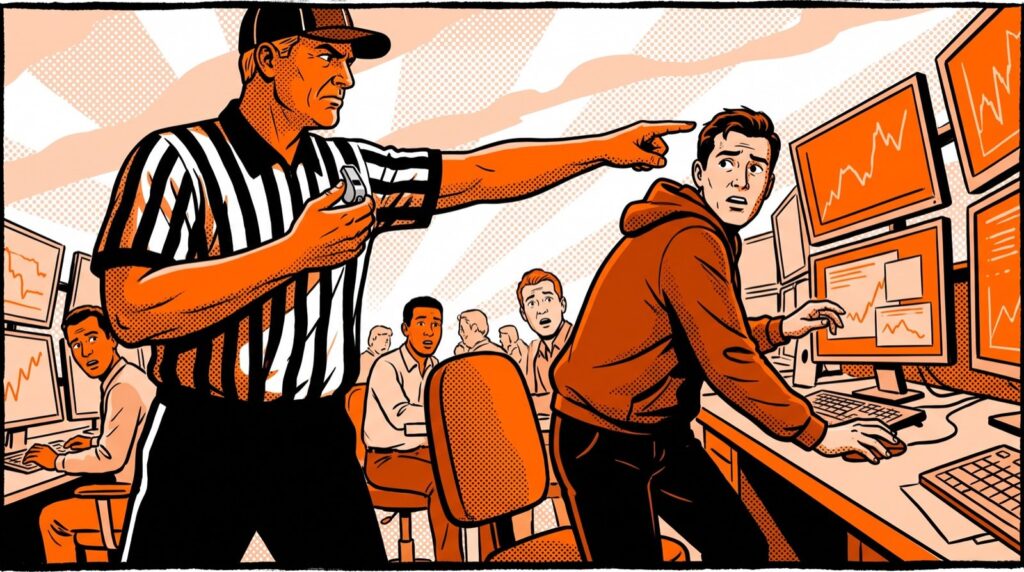
Most funded futures accounts are simulated. Your orders never reach the exchange, and the firm pays you a share of simulated profits. That creates a gap: some trades make money in a simulator that would never have made money in the real market. Every serious firm has rules against profiting from that gap, usually under a heading like fair play or prohibited practices. Break them and you can lose your profits even if you never broke a drawdown rule. Here is what counts as gaming the sim, and how to stay well clear of it.
Why a simulator can be gamed
In a real market, your limit order waits in a queue behind everyone else’s at the same price, and in a thin market there may be nobody to take the other side at all. A simulator often fills you as soon as the price touches your level. In a busy front month contract the difference is small. In a quiet contract, or at a quiet time of day, the last traded price can be minutes old, and a simulator may fill you at a price no real trader would have given you. Our guide to prop firm slippage explains the same gap from the other side.
A worked example: My Funded Futures
At the end of October 2026, My Funded Futures widened its fair play policy. It now bans profiting from “isolated, stale or unrealistic fills in low-liquidity contracts (including back-month contracts)”. The rule covers low volume hours too, and applies however long you held the trade. The rest of its list is a good map of what most firms watch for:
- Stacking orders. Placing several limit orders at the same price to manipulate fills.
- Exploiting perfect fills. Relying on the lack of slippage, or very tight brackets, to profit from favourable simulated fills.
- Trading tier 1 data releases. Trading during major economic data releases.
- High frequency trading. Not allowed on its plans.
- Bots that exploit the simulator. Automated trading is allowed, but not if it profits from favourable simulated fills.
- Coordinated trading. Identical or opposite trades across accounts that are not connected to each other.
- Copy trading and shared devices. Each trader must enter and exit their own trades, and may not use the same device as another trader.
- Hedging. Holding buy and sell positions on the same underlying at once, such as the E-mini Nasdaq and the Micro Nasdaq.
Other firms have their own versions
The wording varies, but the ideas repeat. Lucid Trading, for example, treats trading US high impact news on LucidDaily as a hard breach, and you must be flat from one minute before the release to one minute after, according to its help centre. We cover the most common rules one by one in our guides to news trading, hedging, copy trading, EAs and bots and scalping.
What happens if you are flagged
Firms usually check for these practices when you ask for a payout, which is the worst possible moment to find out. My Funded Futures’ policy says it can end your agreement straight away, confiscate profits made from prohibited practices, review evaluations you have already passed, and refuse funding or a refund. Sharing a device can mean being barred for good. Our guide to why prop firm payouts are denied covers the other common reasons.
How to stay on the right side
- Ask one question about every trade: would this have filled in the real market? If the honest answer is “probably not”, do not count on the profit.
- Trade the front month contract in liquid hours. Back month contracts and the quiet hours of the night are where stale fills happen.
- Be careful with tiny targets. A strategy that makes one or two ticks per trade depends on perfect fills, which is exactly what firms check.
- One trader, one device, your own trades. Do not share logins, computers or trade signals with other funded traders.
- Check the calendar. Know which releases your firm restricts, and be flat before them if required.
- Get answers in writing. If you are unsure whether something is allowed, ask support by email or ticket and keep the reply.
Key takeaways
- Fair play rules ban profiting from fills that would not happen in a real market.
- My Funded Futures now confiscates profits from stale or unrealistic fills, including in back month contracts and quiet hours.
- Firms usually check at payout time, so a breach can cost you profits you thought were yours.
- Trade liquid contracts in liquid hours, use your own device, and get unclear rules confirmed in writing.
Frequently Asked Questions
What is a stale fill in prop trading?
A fill at a price that is out of date, usually in a quiet contract or at a quiet time of day, where the simulator fills your order at a price nobody in the real market would have given you. Firms such as My Funded Futures confiscate profits made this way.
Can I trade back month futures contracts at a prop firm?
Check your firm's rules. My Funded Futures does not ban back month contracts outright, but since October 2026 its fair play policy bans profiting from isolated, stale or unrealistic fills in low liquidity contracts, including back months.
When do prop firms check for prohibited trading?
Usually when you request a payout. A firm can also review evaluations you have already passed, so it is safer to avoid grey areas from the start.