What Counts as Overtrading in a Prop Firm?
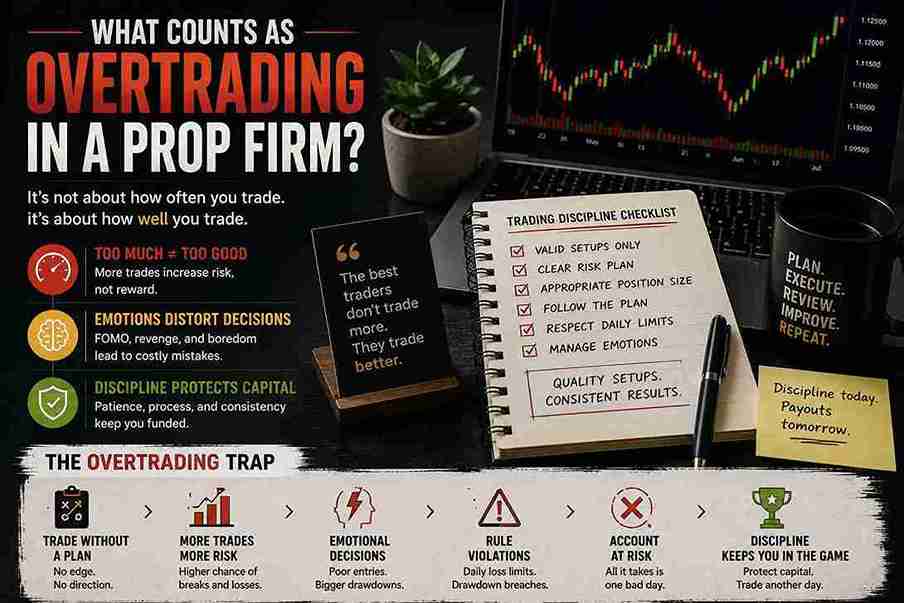
Overtrading prop firm accounts is one of the fastest ways to turn a disciplined trader into an emotional one. Many traders assume that taking more trades increases their chances of making money. In reality, excessive trading often leads to poor decision-making, unnecessary losses and breaches of prop firm rules. Successful funded traders understand that consistency […]

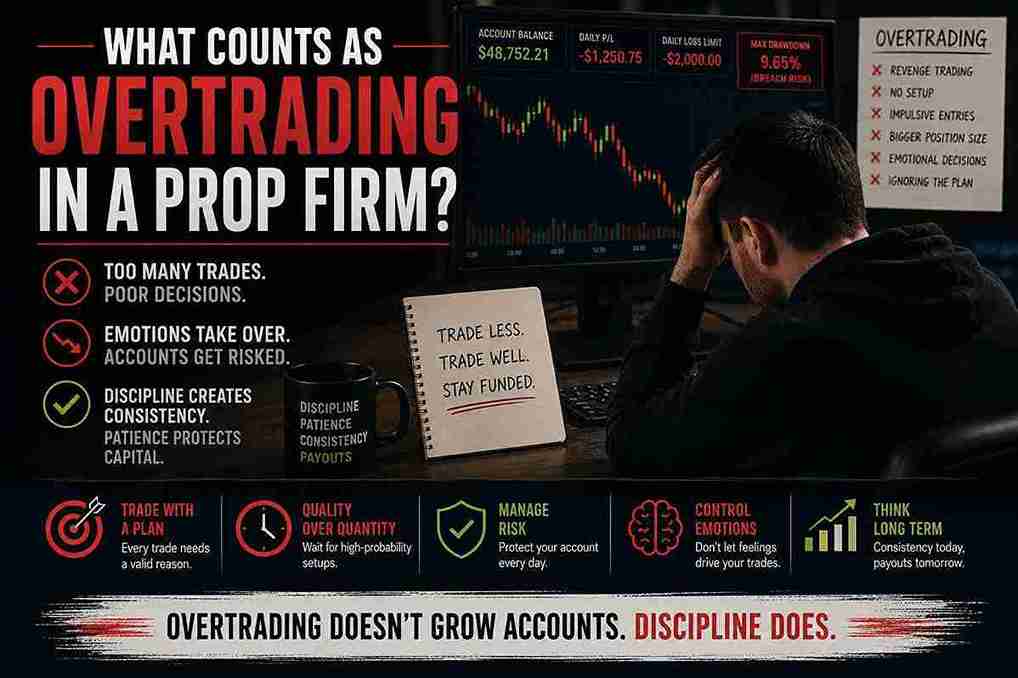
Overtrading prop firm accounts is one of the fastest ways to turn a disciplined trader into an emotional one. Many traders assume that taking more trades increases their chances of making money. In reality, excessive trading often leads to poor decision-making, unnecessary losses and breaches of prop firm rules.
Successful funded traders understand that consistency matters more than activity. They wait patiently for high-quality opportunities instead of feeling pressured to trade every market movement.
In this guide, we’ll explain what overtrading prop firm traders should avoid, why it happens and how professional traders maintain discipline while protecting their funded accounts.
What Is Overtrading in a Prop Firm?
Overtrading means taking more trades than your trading plan or market conditions justify.
It isn’t simply about the number of trades you place.
A trader may execute ten well-planned trades in one day without overtrading, while another trader may overtrade after taking only three impulsive positions.
In a prop firm, overtrading usually involves:
- Entering trades without valid setups.
- Trading out of boredom.
- Chasing previous losses.
- Increasing position size unnecessarily.
- Ignoring your trading plan.
The problem isn’t activity itself. The problem is trading without discipline.
Why Overtrading Happens in a Prop Firm
Several psychological factors contribute to overtrading prop firm accounts.
Common reasons include:
Fear of Missing Out (FOMO)
Some traders believe every market movement is an opportunity.
This creates unnecessary entries that don’t meet their trading criteria.
Revenge Trading
After a losing trade, some traders immediately enter another position to recover losses.
This often leads to even larger drawdowns.
Overconfidence
A series of winning trades can create false confidence.
Some traders increase both their trading frequency and position size, exposing themselves to greater risk.
Boredom
Markets don’t provide quality setups all day.
Many traders simply feel the need to stay active.
Professional traders know that waiting is part of trading.
How Overtrading in a Prop Firm Affects Funded Accounts
One of the biggest dangers of overtrading prop firm accounts is that it increases the likelihood of breaking trading rules.
Frequent trading often results in:
- Higher transaction costs.
- Emotional decision-making.
- Larger drawdowns.
- Poor position sizing.
- Daily loss limit breaches.
- Maximum drawdown violations.
Even profitable traders can lose funded accounts if emotional trading causes them to break firm rules.
Signs of Overtrading in a Prop Firm
Professional traders regularly monitor their behaviour for warning signs.
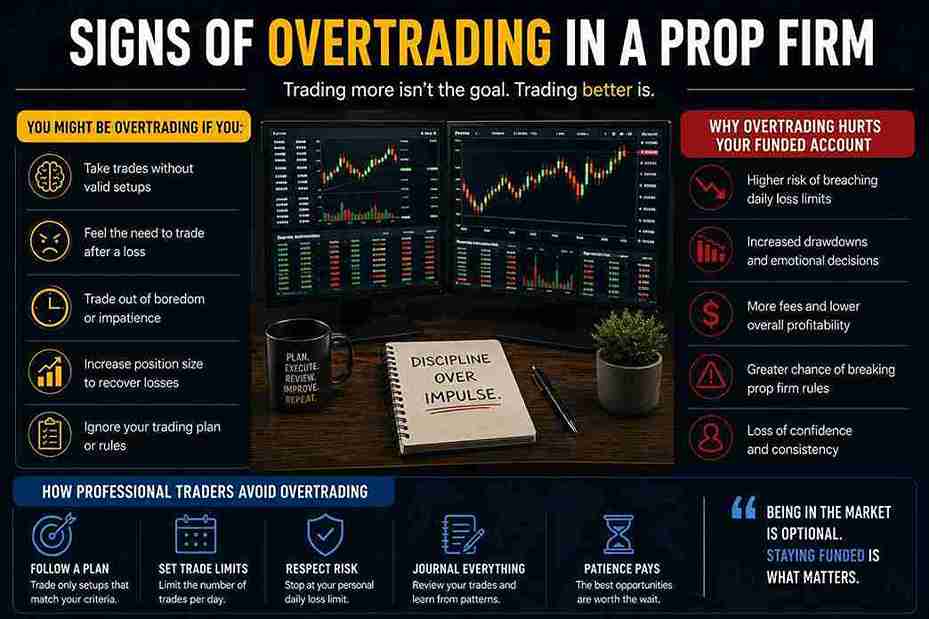
You may be overtrading if you:
- Enter trades without waiting for confirmation.
- Feel anxious when you’re not trading.
- Trade immediately after a loss.
- Increase position size to recover losses.
- Ignore your written trading plan.
- Continue trading after reaching your personal loss limit.
Recognising these habits early can prevent unnecessary account breaches.
How Professional Traders Avoid Overtrading in a Prop Firm
One of the biggest differences between beginners and professionals is patience.
Professional traders understand that:
- Not every session offers opportunities.
- Missing a trade is acceptable.
- Quality beats quantity.
- Capital preservation comes first.
Instead of measuring productivity by the number of trades, they measure it by how well they followed their trading plan.
How to Avoid Overtrading in a Prop Firm
Reducing overtrading prop firm behaviour requires structure and discipline.
Professional traders often use these strategies.
Follow a Written Trading Plan
Your trading plan should clearly define:
- Entry conditions.
- Exit rules.
- Position sizing.
- Maximum daily risk.
- Trading hours.
If a trade doesn’t meet your criteria, don’t take it.
Set a Maximum Number of Trades
Some traders limit themselves to:
- Three trades per day.
- Five trades per session.
- One trade per setup.
These personal limits help prevent emotional trading.
Stop After Your Daily Loss Limit
Professional traders often stop before reaching the firm’s maximum daily loss limit.
Creating a personal buffer helps reduce emotional decisions later in the day.
Review Every Trading Session
Keeping a trading journal allows you to identify:
- Emotional triggers.
- Recurring mistakes.
- Low-quality setups.
- Overtrading patterns.
Over time, you’ll recognise situations where you’re most likely to overtrade.
Does Trading Frequently Always Mean Overtrading?
Not necessarily.
Some strategies naturally generate more trade opportunities than others.
For example, scalpers may place significantly more trades than swing traders.
The key question isn’t:
“How many trades did I take?”
Instead ask:
“Did every trade follow my trading plan?”
If every position meets your predefined criteria, frequent trading may simply reflect your strategy rather than poor discipline.
Common Mistakes That Lead to Overtrading
Many funded traders unknowingly create habits that encourage excessive trading.
These include:
- Watching charts all day.
- Trading multiple markets without a plan.
- Constantly changing strategies.
- Ignoring market conditions.
- Trying to recover previous losses.
- Focusing on daily profit targets instead of execution.
Avoiding these mistakes improves both consistency and risk management.
Final Thoughts
Managing overtrading prop firm behaviour is less about reducing the number of trades and more about improving the quality of every decision.
Professional traders don’t succeed because they trade constantly. They succeed because they know when not to trade.
If you want to remain funded, focus on following your trading plan, protecting your capital and waiting patiently for high-probability setups.
Consistency comes from discipline, not activity.
Frequently Asked Questions
What is overtrading in a prop firm?
Overtrading occurs when traders take unnecessary or impulsive trades that don’t follow their trading plan, often increasing the risk of breaking prop firm rules.
Can overtrading cause me to lose a funded account?
Yes. Overtrading often leads to emotional decisions, excessive risk-taking and breaches of daily loss limits or maximum drawdown rules.
How many trades per day is considered overtrading?
There is no fixed number. Overtrading depends on whether each trade follows your strategy and risk management rules.
How do professional traders avoid overtrading?
Professional traders follow a written trading plan, limit unnecessary trades, maintain a trading journal and prioritise quality setups over quantity.