Why Trading Platforms Matter More Than Prop Firm Marketing
When comparing prop firms, it is easy to focus on account sizes, profit targets and promotional offers. However, prop firm platform reliability deserves equal attention because the trading platform is where you analyse markets, place orders and manage positions. A strong marketing campaign cannot compensate for a platform that is difficult to use, unreliable or […]


When comparing prop firms, it is easy to focus on account sizes, profit targets and promotional offers. However, prop firm platform reliability deserves equal attention because the trading platform is where you analyse markets, place orders and manage positions.
A strong marketing campaign cannot compensate for a platform that is difficult to use, unreliable or poorly suited to your trading approach. Unexpected disconnections, slow performance or problems managing orders can disrupt your trading routine, particularly when you have an open position.
Before joining a prop firm, look beyond promotional claims and examine the actual trading environment. Understanding platform stability, order management, execution conditions and compatibility can help you decide whether the platform supports your trading needs.
Why Does the Trading Platform Matter?
The platform is the main interface between the trader and the trading environment.
You may use it to:
- Analyse price movements
- Place orders
- Set stop-losses
- Set take-profit orders
- Monitor open positions
- Review trading history
- Track account performance
If the platform becomes unavailable or an important function does not work as expected, it can affect how you manage an active trade.
For this reason, platform quality should be considered alongside the firm’s other account conditions.
What Is Prop Firm Platform Reliability?
Prop firm platform reliability refers to how consistently a trading platform performs when traders need to access markets and manage their accounts.
This can include:
- Platform availability
- Order functionality
- Stability
- Chart performance
- Position management
- Connection reliability
- Data updates
- Access across supported devices
Reliability does not mean that technical problems can never occur. Instead, traders should understand how dependable the platform is for the functions they regularly use.
1. Platform Stability
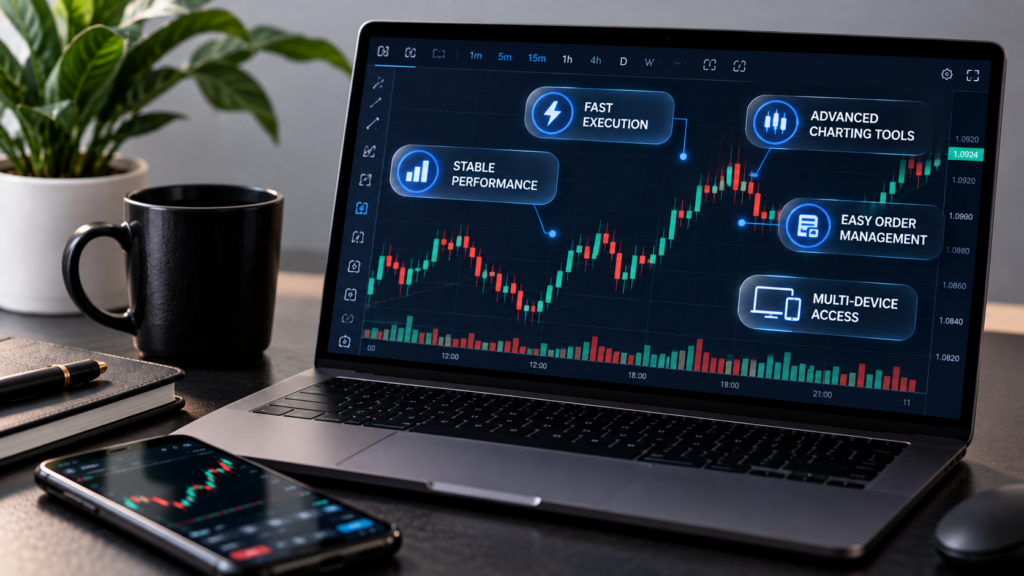
A stable platform should allow traders to navigate charts, monitor positions and manage orders without frequent interruptions.
Before joining a firm, consider whether the platform has:
- Unexpected disconnections
- Frequent outages
- Slow loading
- Freezing or crashes
- Delayed account information
Even short interruptions can matter if they occur while a position is open.
2. Order Management
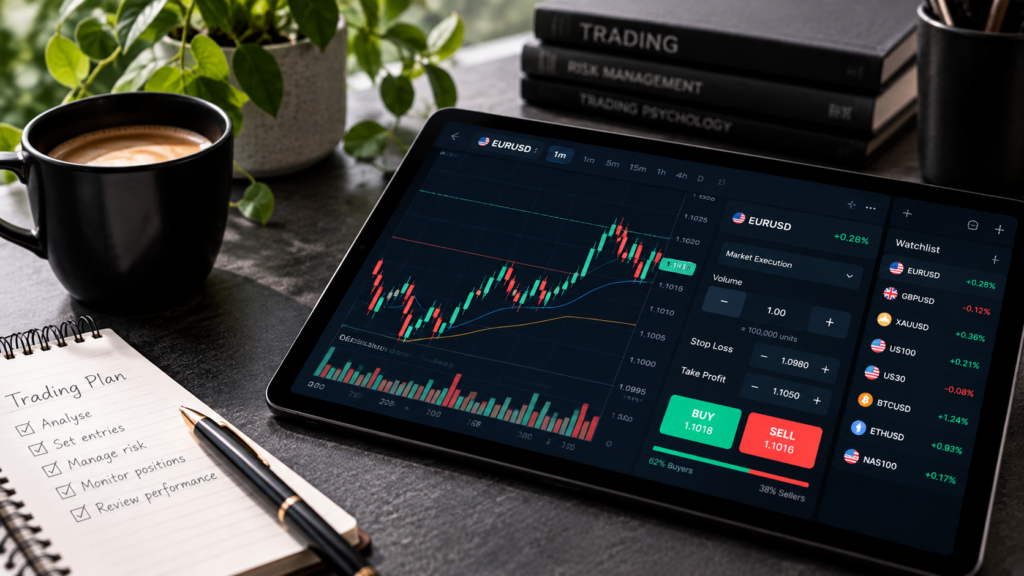
The ability to manage orders efficiently is particularly important when trading actively.
Check whether the platform allows you to easily:
- Open positions
- Close positions
- Modify stop-losses
- Modify take-profit levels
- Cancel pending orders
- Monitor open trades
The process should be clear enough that you can manage your positions without unnecessary complexity.
3. Execution Environment
Platform reliability and execution are related but are not exactly the same thing.
A platform can remain accessible while market execution is affected by volatility, liquidity or other market conditions.
When evaluating a prop firm, understand:
- How orders are executed
- Which order types are available
- How spreads are presented
- How slippage is handled
- What happens during volatile markets
Do not assume that the platform’s advertised features guarantee a particular execution outcome.
4. Charting and Market Data
Charting tools are another important part of the trading environment.
Depending on your strategy, you may need:
- Multiple timeframes
- Technical indicators
- Drawing tools
- Custom layouts
- Alerts
- Multiple charts
Check whether the platform provides the tools you actually use rather than simply counting how many features it advertises.
5. Accessibility
A platform may be reliable on one device but less practical on another.
Check whether it supports your normal setup, including:
- Desktop
- Laptop
- Web browser
- Mobile device
If you sometimes need to monitor or manage positions away from your main computer, mobile or web access may also be relevant.
Why Marketing Should Not Be Your Main Comparison
Marketing can tell you what a firm wants potential customers to notice.
It does not necessarily tell you what the day-to-day trading experience will be like.
A promotional page might highlight:
- Large account sizes
- Profit targets
- Discounts
- Fast payouts
- Platform names
- Promotional bonuses
These details can be useful, but traders should also investigate the actual account conditions and trading environment.
The platform should be assessed based on what you need to trade effectively.
How to Evaluate Platform Reliability Before Joining
Check the Platform
Find out which platform the firm uses and whether it is compatible with your devices and trading workflow.
Read the Trading Rules
Look for information about execution, trading restrictions and platform-related conditions.
Look for Official Updates
If the firm experiences a technical issue, check how it communicates outages, maintenance and other platform problems.
Test It When Possible
If a demo or trial account is available, use it to become familiar with the platform before committing to a paid account.
Understand the Support Process
Find out how traders can contact support if they experience a platform or account issue.
Platform Reliability for Different Trading Styles
The importance of different platform features can depend on your strategy.
Scalpers
Scalpers may place and close trades quickly, making efficient order management and execution particularly relevant.
Day Traders
Day traders may prioritise stable charting, order management and reliable access during their main trading sessions.
Swing Traders
Swing traders may place greater importance on position monitoring, alerts and reliable access over longer holding periods.
There is no single platform feature that matters equally to every trader.
Warning Signs to Investigate
A single technical issue does not necessarily indicate that a platform is unreliable.
However, traders may want to investigate further if they repeatedly encounter:
- Extended outages
- Frequent disconnections
- Persistent order-management problems
- Delayed account information
- Poor communication during technical issues
- Unclear procedures for platform-related disputes
Look at the broader pattern rather than drawing conclusions from one isolated incident.
A Simple Platform Comparison Checklist
Before joining a prop firm, check:
| Feature | What to Check |
| Stability | Does the platform operate consistently? |
| Order management | Can positions be opened and modified easily? |
| Execution | Are execution conditions clearly explained? |
| Charting | Does it have the tools you need? |
| Accessibility | Can you use it on your preferred devices? |
| Support | Is there a clear process for technical issues? |
| Communication | Does the firm provide updates during outages? |
| Compatibility | Does it fit your existing trading workflow? |
This can help you compare the trading environment rather than relying on promotional material alone.
Questions to Ask Before Joining
Ask yourself:
- Is the platform compatible with my trading style?
- Can I easily manage active positions?
- Does it provide the charting tools I need?
- Can I access it from my preferred devices?
- What happens if the platform becomes unavailable?
- How does the firm communicate technical problems?
- Is there a support process for execution or platform issues?
- Have I tested the platform if a trial is available?
These questions can reveal practical considerations that may not appear in promotional material.
Final Thoughts
Marketing can help you discover a prop firm, but the trading platform is where your actual trading takes place.
Prop firm platform reliability should therefore be part of your research before joining an account. Stability, order management, accessibility, charting and execution conditions can all influence the practical trading experience.
Rather than focusing exclusively on account size or promotional offers, examine the complete trading environment and make sure the platform supports the way you actually trade.
Frequently Asked Questions
Why is prop firm platform reliability important?
The platform is used to analyse markets, place orders and manage positions. Reliability issues can make these activities more difficult, particularly when a position is active.
Does a reliable platform guarantee good execution?
No. Platform availability and execution quality are related but separate considerations. Market conditions, liquidity and order types can all affect execution.
Should I test a prop firm’s platform before joining?
If a demo or trial is available, testing the platform can help you understand its interface, features and compatibility with your trading routine.
What should I look for in a reliable trading platform?
Consider stability, order management, charting, accessibility, account information, execution conditions and the firm’s process for handling technical problems.
Is platform reliability more important for scalpers?
It can be particularly relevant to scalpers because they may need to manage positions quickly. However, reliable platform access is important for all trading styles.
Can a platform outage affect a prop firm account?
Potentially. The effect depends on the circumstances and the firm’s policies. Traders should understand how the firm handles technical issues and retain relevant records when problems occur.