Prop Firm Trading Platforms: How to Compare Before You Join
Choosing a prop firm involves more than looking at account size, drawdown or profit targets. The trading platform itself can have a direct impact on how you analyse markets, place orders and manage positions. Different prop firm trading platforms can offer different charting tools, order types, execution environments and interfaces. A platform that works well […]

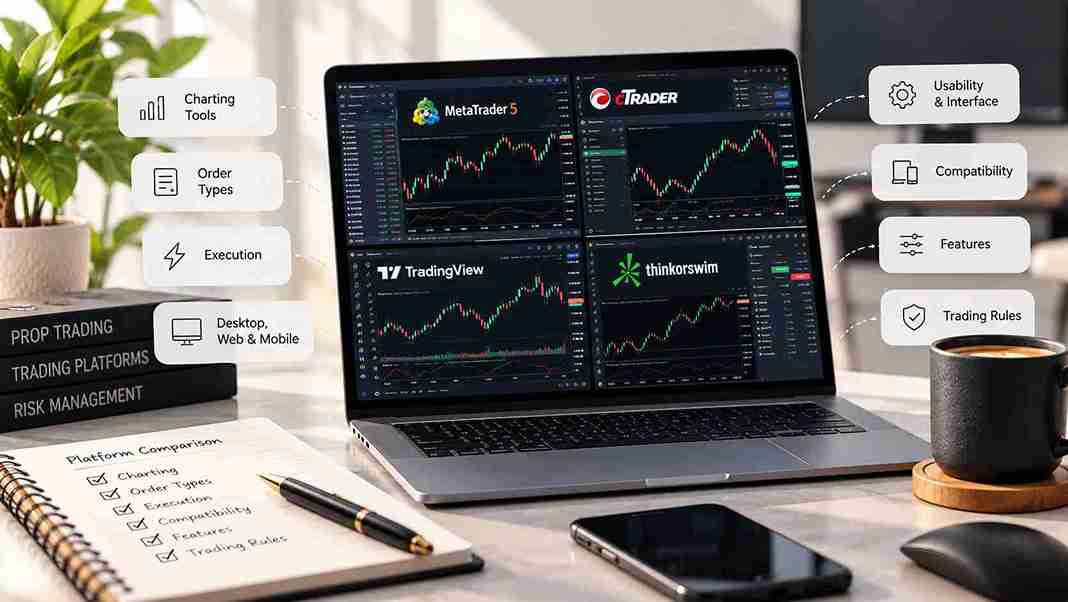
Choosing a prop firm involves more than looking at account size, drawdown or profit targets. The trading platform itself can have a direct impact on how you analyse markets, place orders and manage positions.
Different prop firm trading platforms can offer different charting tools, order types, execution environments and interfaces. A platform that works well for one trading style may not suit another.
Before joining, it is worth comparing the platform with the way you actually trade.
Why Does the Trading Platform Matter?
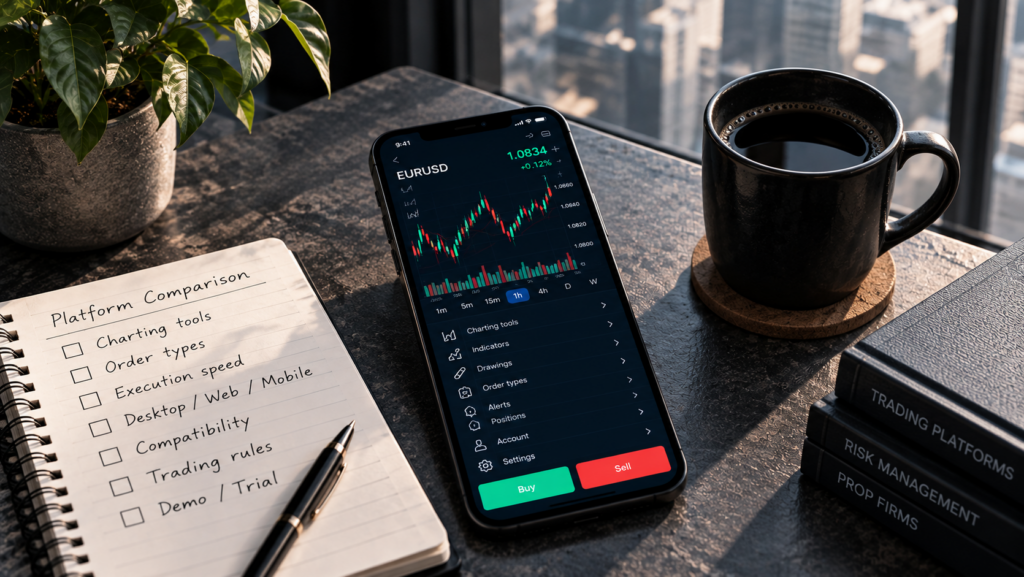
Your trading platform is where you execute and manage your trades. If the interface is unfamiliar or lacks tools you regularly use, it can make your normal trading process more difficult.
For example, a scalper may care about order execution and quick position management, while a swing trader may place greater importance on charting tools and keeping positions open according to the firm’s rules.
The platform should therefore be evaluated alongside the prop firm’s account conditions.
What Should You Compare?
When comparing prop firm trading platforms, look beyond the platform’s name. Consider how it performs across the features you actually need.
1. Charting Tools
Check whether the platform provides the technical analysis tools you normally use.
Look for features such as:
- Multiple chart timeframes
- Technical indicators
- Drawing tools
- Custom layouts
- Multiple charts
- Price alerts
If your strategy relies heavily on technical analysis, having a familiar charting environment can make your routine easier.
2. Order Types
Different platforms may support different order functionality.
Check whether you can use the order types required by your strategy, such as:
- Market orders
- Limit orders
- Stop orders
- Stop-loss orders
- Take-profit orders
Also check how orders are displayed and modified once they have been placed.
3. Execution and Order Management
Execution is another important consideration.
You should understand how the platform handles order placement, modifications and cancellations. It is also useful to know whether the firm’s trading environment has any specific execution conditions or restrictions.
For active traders, being able to manage positions quickly can be particularly important.
4. Desktop, Web and Mobile Access
Consider how and where you normally trade.
Some platforms may offer desktop applications, web-based access or mobile applications, while others may have more limited access.
Check:
- Desktop compatibility
- Browser compatibility
- Mobile availability
- Device requirements
- Whether features differ between versions
A platform that works well on your primary device can make your trading routine more straightforward.
Does the Platform Suit Your Trading Style?
There is no single platform setup that suits every trader.
Scalpers
Scalpers may want an interface that makes order placement and position management straightforward, particularly when trades are held for short periods.
Day Traders
Day traders may prioritise charting, alerts, execution and efficient order management.
Swing Traders
Swing traders may place greater emphasis on charting, position monitoring and the ability to manage trades over longer periods.
Your trading style should therefore influence which platform features you prioritise.
Check Platform Compatibility Before Joining
One of the easiest mistakes is signing up first and checking the platform afterwards.
Instead, confirm that the platform supports your normal setup before purchasing an account.
Check whether it works with:
- Your computer
- Your operating system
- Your preferred browser
- Your mobile device
- Your charting workflow
- Any permitted third-party tools
If you use a specific trading workflow, make sure the platform can support it under the firm’s rules.
Look at the Platform Alongside the Firm’s Rules
The platform cannot be considered separately from the account rules.
For example, a firm may have restrictions around:
- Trading during specific market events
- Holding positions overnight
- Holding positions over weekends
- Automated trading
- Certain strategies
- Maximum position sizes
A platform may technically allow an action that the prop firm’s rules do not.
Always check the firm’s current terms before trading.
Test the Platform Before Committing
If a demo, trial or practice environment is available, use it before committing to an account.
This can help you understand:
- Where orders are placed
- How stop-losses are added
- How positions are closed
- How account information is displayed
- How quickly you can find important information
- Whether the interface feels familiar
Testing the platform can reveal practical issues that are difficult to identify from a feature list alone.
Don’t Choose Based Only on the Platform Name
A familiar platform name does not automatically mean the trading environment will be identical across providers.
The prop firm’s implementation, account rules, available instruments and execution conditions can all matter.
Instead of asking only, “Which platform does the firm use?”, ask:
“Does this trading environment support the way I trade?”
That question provides a more useful comparison.
Prop Firm Trading Platform Checklist
Before joining, check:
- Platform: Is it familiar or easy to learn?
- Charting: Does it have the tools you need?
- Orders: Does it support your preferred order types?
- Execution: Can you efficiently manage positions?
- Devices: Does it work on your preferred devices?
- Compatibility: Does it fit your existing workflow?
- Trading rules: Are your strategies permitted?
- Testing: Can you try the platform before committing?
This gives you a practical framework for comparing different providers.
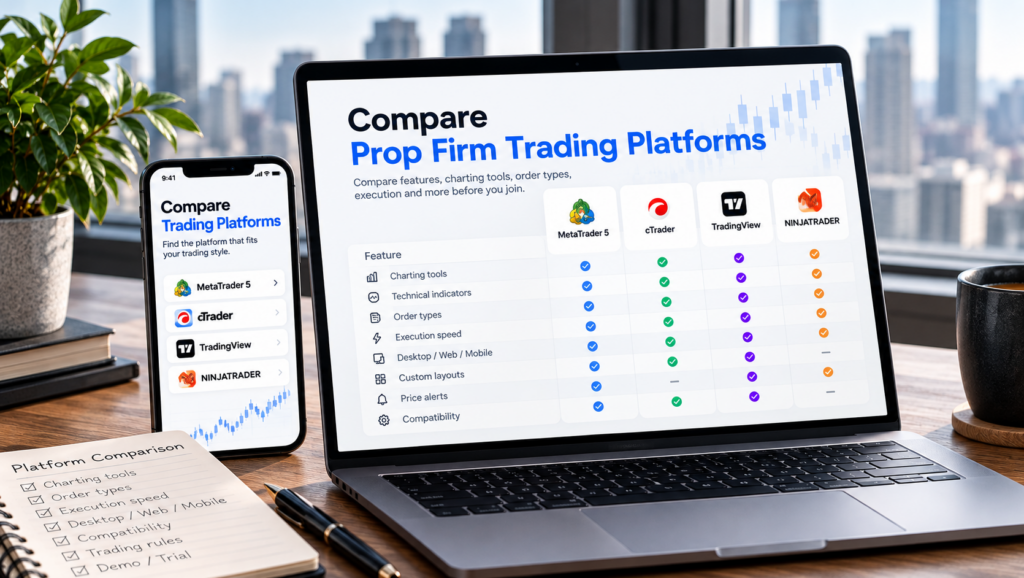
How to Compare Prop Firm Trading Platforms
Rather than choosing a firm based on one feature, compare the complete trading environment.
You can create a simple checklist for each provider and record:
| Feature | Prop Firm A | Prop Firm B | Prop Firm C |
| Trading platform | |||
| Charting tools | |||
| Order types | |||
| Desktop access | |||
| Mobile access | |||
| Trading restrictions | |||
| Demo or trial availability | |||
| Platform compatibility |
The purpose is not to find the platform with the longest feature list. It is to identify the differences that matter to your own trading routine.
Final Thoughts
The trading platform is an important part of the overall prop firm experience. Prop firm trading platforms can differ in charting, order management, accessibility and functionality, so traders should look beyond the platform’s name.
Before joining, test the platform where possible, check its compatibility with your setup and make sure its features and restrictions fit your trading approach.
A platform comparison should ultimately be part of a broader review of the firm’s account rules, costs and trading conditions.
Frequently Asked Questions
What should I look for in prop firm trading platforms?
Focus on charting tools, order types, execution, device compatibility, accessibility and whether the platform supports your trading workflow.
Does the trading platform affect my trading?
It can. An unfamiliar or unsuitable interface may make analysis and position management more difficult, particularly for active traders.
Should I test a prop firm’s platform before joining?
If a demo or trial is available, testing the platform can help you understand its features and determine whether it suits your routine.
Is a popular trading platform automatically better?
Not necessarily. The platform’s suitability depends on your trading style, workflow and the specific conditions applied by the prop firm.
Should I compare the platform with the prop firm’s rules?
Yes. Platform functionality does not override the firm’s trading rules. Always check which strategies, instruments and trading conditions are permitted.