
Prop Firm Challenge Cost: How Much Money Do You Really Need?
Many aspiring traders assume they need thousands of dollars before they can begin trading with a prop firm. In reality, the prop firm challenge cost is often much lower than people expect. Although prop firms provide access to large funded accounts, you’ll still need enough money to cover evaluation fees, trading-related expenses and your personal […]

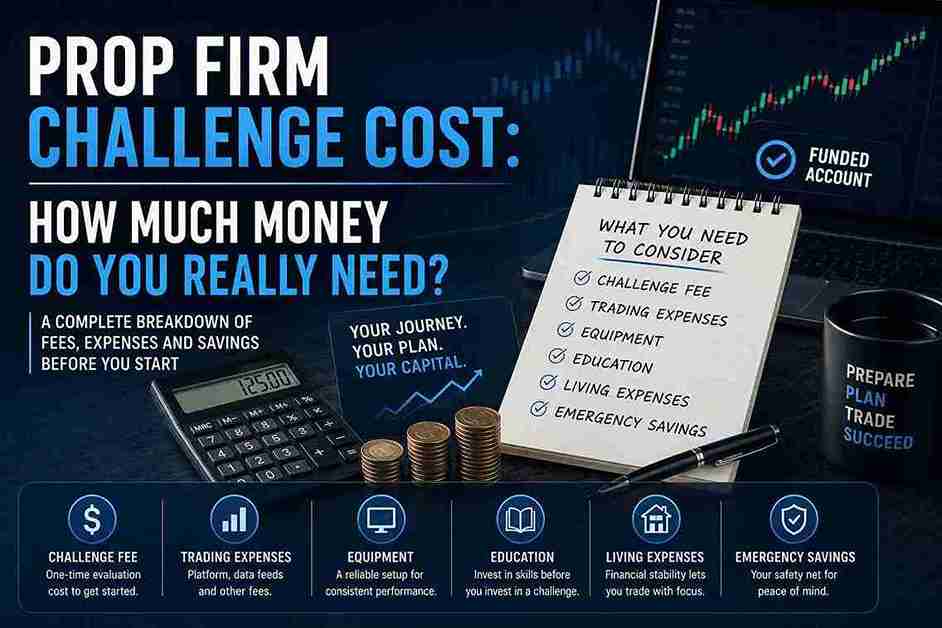
Many aspiring traders assume they need thousands of dollars before they can begin trading with a prop firm. In reality, the prop firm challenge cost is often much lower than people expect.
Although prop firms provide access to large funded accounts, you’ll still need enough money to cover evaluation fees, trading-related expenses and your personal finances while working towards becoming consistently profitable.
Understanding the true prop firm challenge cost helps you prepare financially and avoid unnecessary pressure during the evaluation process.
In this guide, we’ll break down every major expense and explain how much money you should realistically have before joining a prop firm.
What Is the Prop Firm Challenge Cost?
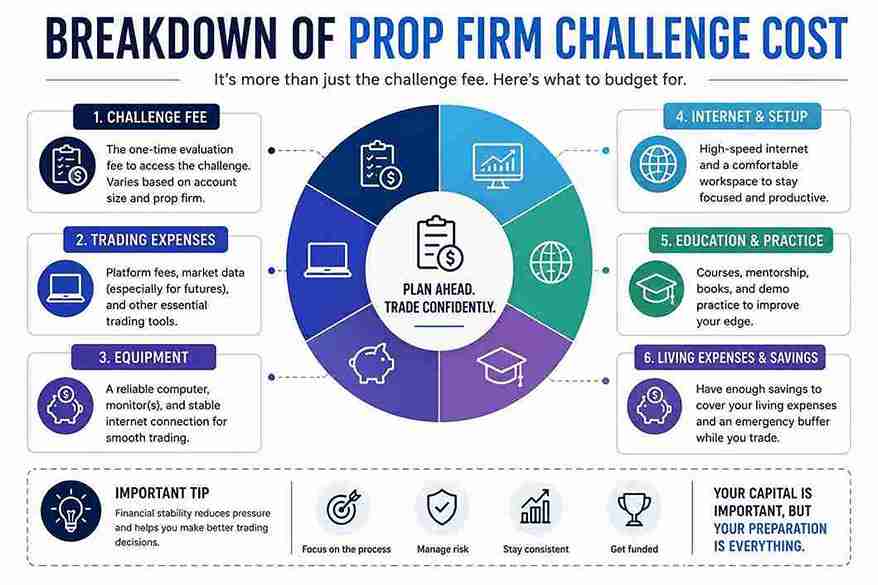
The largest upfront expense when joining most prop firms is the evaluation or challenge fee.
Instead of depositing trading capital, you usually pay a one-time fee to access an evaluation account.
The exact prop firm challenge cost varies depending on:
- Account size.
- Evaluation model.
- Prop firm provider.
- Platform used.
- Promotional discounts.
Larger account sizes generally come with higher challenge fees, although they also provide access to more buying power if you pass.
The Challenge Fee Isn’t the Only Cost
Many beginners focus only on the evaluation fee.
However, there are several additional expenses worth considering before starting.
These may include:
- Trading platform subscriptions.
- Market data fees (mainly for futures traders).
- Internet costs.
- Computer equipment.
- Educational resources.
- Practice accounts.
Planning for these expenses helps you avoid unexpected financial stress later.
Should You Have Emergency Savings?
One of the most overlooked parts of the prop firm challenge cost isn’t related to trading at all.
Professional traders understand the importance of financial stability.
If you’re relying on trading profits to pay next month’s rent or bills, emotional pressure can quickly influence your decisions.
Ideally, you should have savings that cover:
- Rent or mortgage.
- Food.
- Utilities.
- Transport.
- Insurance.
- Other essential expenses.
This allows you to focus on following your trading plan instead of chasing profits.
Education Is an Investment
Many successful funded traders spend money on education before paying for a challenge.
Examples include:
- Trading books.
- Online courses.
- Mentoring.
- Demo trading.
- Market research tools.
Although these aren’t mandatory, improving your knowledge often increases your chances of passing on your first attempt.
Equipment You Actually Need
Contrary to popular belief, you don’t need an expensive trading setup.
Most professional traders simply use:
- A reliable laptop or desktop.
- Stable internet.
- Trading software.
- A comfortable workspace.
- Backup internet where possible.
A dependable setup is far more valuable than multiple monitors or expensive accessories.
How Much Money Should Beginners Have?
While every trader’s financial situation is different, beginners should think beyond the evaluation fee.
In addition to the prop firm challenge cost, consider having money available for:
- Living expenses.
- Unexpected costs.
- Additional challenge attempts if necessary.
- Continued education.
Being financially prepared reduces stress and improves decision-making.
Prop Firm Challenge Cost vs Personal Trading Capital
One reason prop firms have become increasingly popular is the lower financial barrier to entry.
Personal Trading
Requires:
- Funding your own account.
- Accepting all financial risk.
- Building capital gradually.
Prop Firm Trading
Requires:
- Paying an evaluation fee.
- Passing the challenge.
- Following risk management rules.
Many traders choose prop firms because they can access significantly larger trading capital without risking large personal deposits.
Hidden Costs Many Traders Forget
The initial challenge fee isn’t always the final expense.
Additional costs may include:
- Platform subscriptions.
- Exchange data fees.
- Challenge resets.
- Additional evaluations.
- Computer upgrades.
- Internet improvements.
Understanding the complete prop firm challenge cost helps you budget more accurately.
Are Cheap Challenges Always Better?
Not necessarily.
A lower-priced evaluation doesn’t always provide better value.
Before choosing a prop firm, consider:
- Trading rules.
- Profit split.
- Payout reliability.
- Reputation.
- Customer support.
- Evaluation flexibility.
Choosing based on price alone can lead to disappointment later.
How to Prepare Financially Before Joining
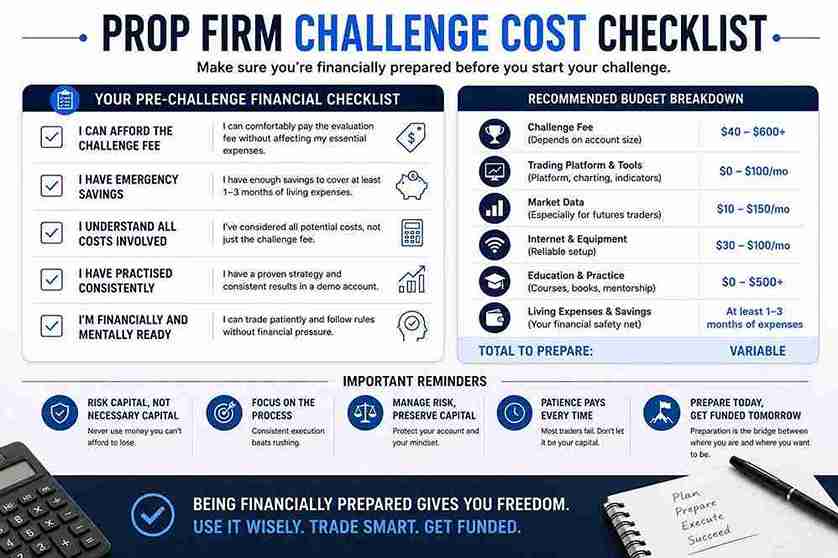
Before purchasing a challenge, ask yourself:
- Can I comfortably afford the fee?
- Do I have emergency savings?
- Have I practised on a demo account?
- Do I understand risk management?
- Am I financially stable enough to trade patiently?
If you answer yes to these questions, you’re likely in a much stronger position to begin.
Final Thoughts
The prop firm challenge cost is usually far lower than the amount required to trade a large personal account.
However, becoming funded involves more than simply paying an evaluation fee. Successful traders prepare by improving their skills, managing their finances and building consistent trading habits before attempting a challenge.
If you approach the process with realistic expectations and proper financial planning, you’ll give yourself a much stronger chance of becoming a consistently funded trader.
Frequently Asked Questions
What is the average prop firm challenge cost?
Challenge fees vary depending on the prop firm and account size, but they are generally much lower than funding a comparable personal trading account.
Do I need thousands of dollars to join a prop firm?
No. Most traders only need enough money to pay the evaluation fee and cover any related trading or living expenses.
Are challenge fees refundable?
Some prop firms refund the evaluation fee after traders successfully complete the challenge and receive their first payout, while others do not. Always check the firm’s specific terms.
Should beginners save money before buying a challenge?
Yes. Having emergency savings and stable finances reduces emotional pressure and allows traders to focus on disciplined execution rather than immediate profits.