
Why Managing Drawdown Is Critical to Success
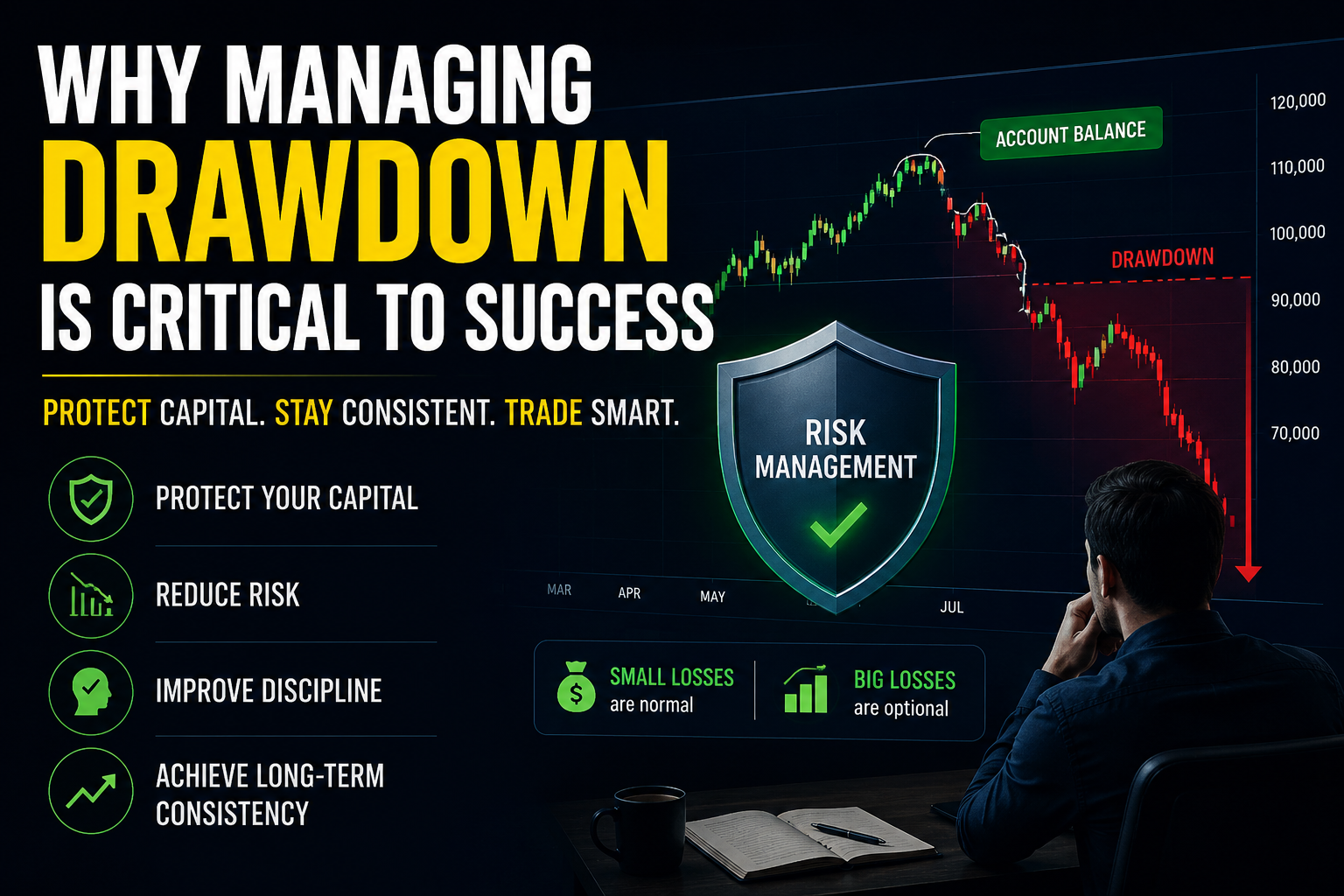
Key Takeaways Why Managing Drawdown Matters Managing drawdown is critical for traders who want long-term success, stronger risk management and consistent trading performance. Many professional traders focus heavily on protecting capital before attempting aggressive growth strategies. Many traders focus heavily on profits while ignoring the risks associated with large losses. However, excessive drawdowns can quickly […]

Key Takeaways
- Drawdown management helps traders protect capital and survive losing periods
- Excessive losses can damage consistency, confidence and long-term profitability
- Most prop firms apply strict daily and maximum drawdown rules
- Effective risk management improves account longevity and trading discipline
- Successful traders focus on preserving capital before maximising profits
Why Managing Drawdown Matters
Managing drawdown is critical for traders who want long-term success, stronger risk management and consistent trading performance. Many professional traders focus heavily on protecting capital before attempting aggressive growth strategies.
Many traders focus heavily on profits while ignoring the risks associated with large losses. However, excessive drawdowns can quickly damage trading accounts, reduce confidence and create emotional decision-making. Therefore, understanding how to control losses is essential for consistent performance.
In both personal and funded trading accounts, strong drawdown management often separates disciplined traders from inconsistent ones.
What Is Drawdown?
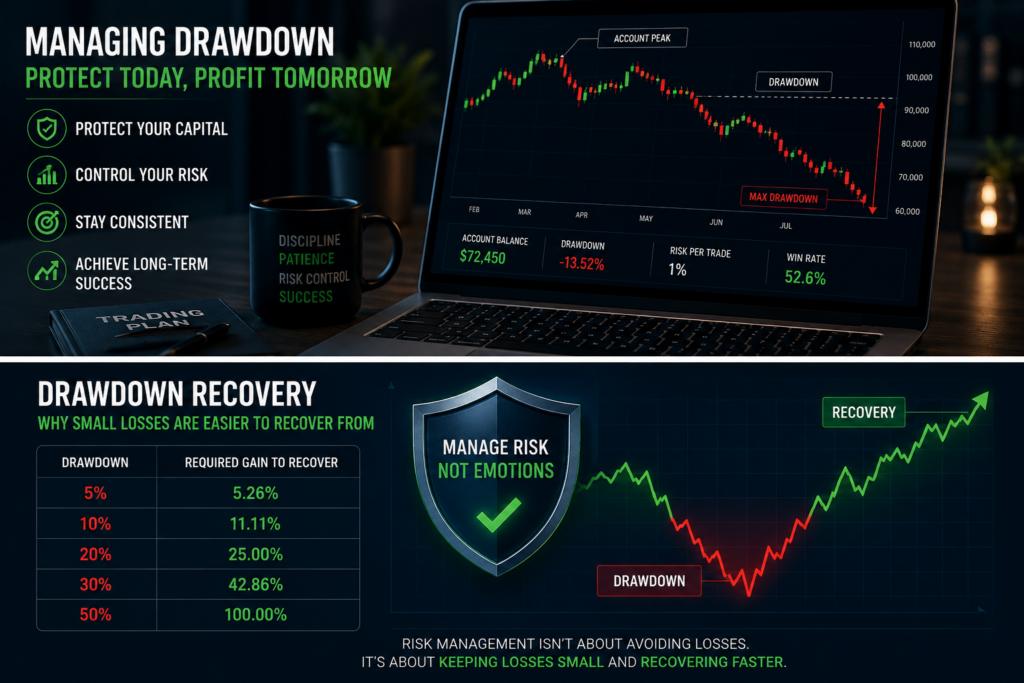
Drawdown refers to the decline in account balance from a peak to a lower point after a series of losses.
For example:
- A $100,000 account drops to $95,000
- The account experiences a 5% drawdown
As a result, traders must recover losses before returning to profitability.
Why Managing Drawdown Is Important
Protects Trading Capital
Good risk management helps traders preserve account balance during difficult market conditions.
Without proper protection, even a few poor trades can significantly damage an account.
Improves Long-Term Consistency
Traders who control losses effectively are more likely to survive market fluctuations and maintain stable performance over time.
In addition, smaller losses are easier to recover compared to large drawdowns.
Reduces Emotional Trading
Large losses often lead to:
- Revenge trading
- Overleveraging
- Fear-based decisions
- Loss of discipline
Therefore, managing exposure helps traders remain calm and objective.
Managing Drawdown in Prop Firms
Most prop firms apply strict risk-management rules to protect capital.
Common restrictions include:
- Daily drawdown limits
- Maximum overall drawdown
- Consistency requirements
- Position size limitations
As a result, traders who ignore drawdown management often lose funded accounts quickly.
Common Causes of Large Drawdowns
Several trading mistakes can lead to excessive losses.
Overleveraging
Using large position sizes increases account exposure dramatically.
Poor Risk Management
Failing to use stop losses or proper trade planning can result in uncontrolled losses.
Emotional Trading
Traders sometimes abandon their strategy after losses and begin making impulsive decisions.
Lack of Patience
Overtrading during volatile conditions often increases unnecessary risk exposure.
Managing Drawdown Like Successful Traders
Experienced traders focus heavily on capital preservation.
Common strategies include:
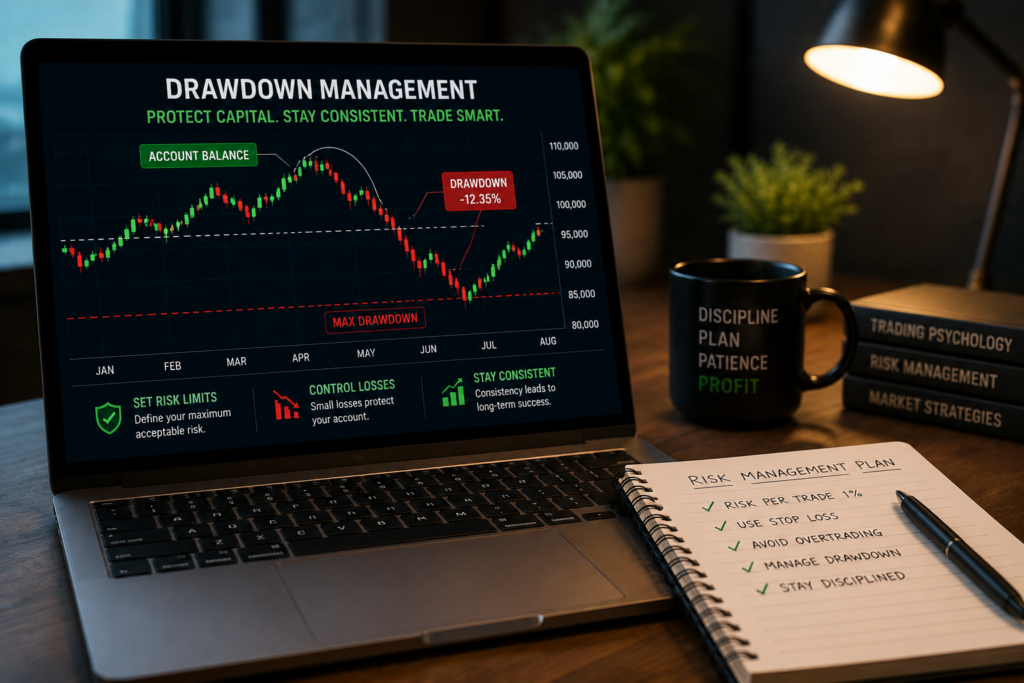
- Limiting risk per trade
- Using stop losses consistently
- Reducing position size after losses
- Following strict trading plans
- Avoiding emotional decision-making
As a result, disciplined traders often achieve more stable long-term performance.
Why Small Drawdowns Matter
Recovering from large losses becomes increasingly difficult over time.
For example:
| Drawdown | Required Recovery |
|---|---|
| 5% | 5.3% |
| 10% | 11.1% |
| 20% | 25% |
| 50% | 100% |
Therefore, preventing large losses is usually more effective than attempting aggressive recovery strategies.
Drawdown and Trading Psychology
Drawdown affects more than account balance. It also impacts confidence and decision-making.
Large losses can create:
- Fear of entering trades
- Hesitation during setups
- Increased stress
- Poor judgement
Meanwhile, traders who manage risk properly usually maintain better emotional control.
Managing Drawdown in Funded Accounts
Funded trading programmes often enforce strict drawdown restrictions.
To maintain funded accounts successfully, traders should:
- Prioritise capital protection
- Respect daily loss limits
- Avoid oversized trades
- Trade consistently instead of aggressively
Ultimately, consistency is usually more valuable than chasing large profits quickly.
Final Verdict
Managing drawdown is critical to trading success because it protects capital, improves consistency and reduces emotional mistakes.
While profits are important, long-term survival depends heavily on controlling losses and maintaining discipline during difficult periods.
Successful traders understand that preserving capital creates more opportunities for sustainable growth over time.
FAQ
1. What is drawdown in trading?
Drawdown is the decline in account balance from a peak to a lower point after losses.
2. Why is drawdown management important?
It helps protect capital, improve consistency and reduce emotional trading mistakes.
3. What causes large drawdowns?
Overleveraging, emotional trading and poor risk management are common causes.
4. How do traders reduce drawdown?
Most traders use stop losses, smaller position sizes and strict risk-management rules.
5. Why do prop firms enforce drawdown limits?
Prop firms use drawdown rules to protect capital and encourage disciplined trading.