Economic Calendar Prop Firm Trading: A Practical Guide
How Economic Calendars Can Improve Your Prop Firm Trading Routine Economic calendar prop firm trading preparation can help traders plan their sessions, understand scheduled market events and make more informed decisions about risk. Although an economic calendar cannot predict price movements, it provides useful information about upcoming releases that may affect the markets you trade. […]

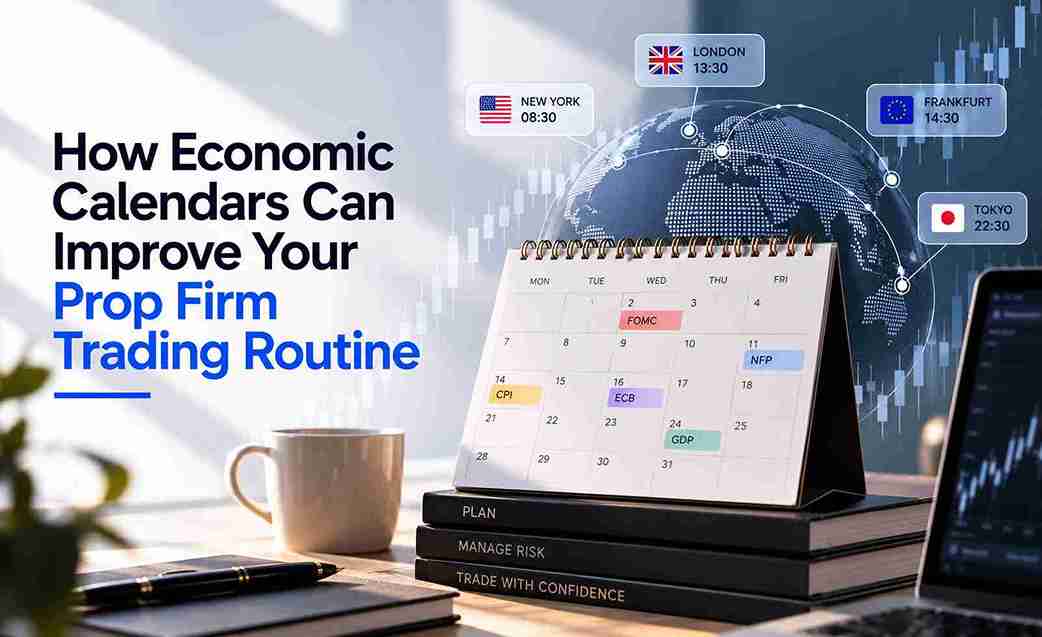
How Economic Calendars Can Improve Your Prop Firm Trading Routine
Economic calendar prop firm trading preparation can help traders plan their sessions, understand scheduled market events and make more informed decisions about risk. Although an economic calendar cannot predict price movements, it provides useful information about upcoming releases that may affect the markets you trade.
For prop firm traders, preparation matters because major economic announcements can coincide with increased volatility, wider spreads or changes in market liquidity. Understanding when these events are scheduled can help you assess your trading environment before entering a position.
The goal is not to predict the market or avoid every economic release. Instead, learn how to incorporate an economic calendar into your existing trading routine while continuing to follow your strategy and your prop firm’s rules.
What Is an Economic Calendar in Prop Firm Trading?
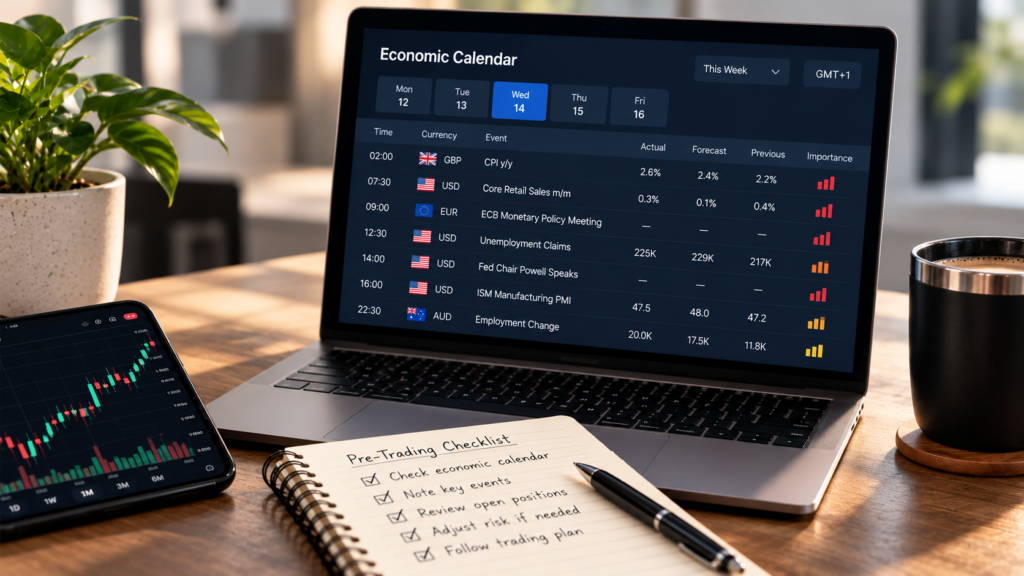
An economic calendar lists scheduled economic events and data releases that may be relevant to financial markets.
Depending on the calendar, events can include:
- Interest-rate decisions
- Inflation data
- Employment reports
- GDP releases
- Central bank speeches
- Manufacturing data
- Consumer confidence reports
Calendars commonly show the scheduled release time, affected currency or region and an indication of the event’s expected market importance.
The exact information available depends on the calendar provider.
Why Economic Calendars Matter for Prop Firm Trading
A trading calendar can help traders know what is scheduled before they begin a session.
For example, a trader may identify that several major economic releases are scheduled during their usual trading hours.
Instead of discovering the event after entering a trade, they can factor the timing into their normal preparation.
This can help with:
- Session planning
- Trade selection
- Risk awareness
- Time management
- Post-trade review
The calendar is therefore a preparation tool rather than a signal generator.
How to Use an Economic Calendar Before a Prop Firm Trading Session
A simple routine can take only a few minutes.
Step 1: Check the Day’s Events
Review the economic calendar before starting your trading session.
Identify events scheduled during the period when you plan to trade.
Step 2: Check the Event Time
Pay attention to the exact release time and the relevant time zone.
This is particularly important if you trade markets that operate across different regions.
Step 3: Identify Events Relevant to Your Markets
Not every economic release will be equally relevant to every instrument.
Focus on events connected to the markets and currencies you actually trade.
Step 4: Review Your Trading Plan
Once you know what is scheduled, consider whether your normal trading plan needs any adjustments.
The objective is not to create a new strategy for every economic release. Instead, use the information as part of your existing preparation process.
Economic Calendar Planning and Prop Firm Risk Management
An economic calendar can also support risk management by making traders more aware of periods when market conditions may change quickly.
For example, if an important release is approaching, a trader can review:
- Current open positions
- Stop-loss levels
- Position size
- Available drawdown
- Daily loss exposure
This does not guarantee that a trade will behave differently during the release. It simply gives the trader more information to consider before making a decision.
Don’t Treat the Calendar as a Trading Signal
An economic calendar tells you what is scheduled, not what price will do.
For example, an event may have a forecast and a previous result, but the actual market reaction can depend on the data itself, expectations and other market factors.
Therefore, traders should avoid treating an event’s importance rating as a guaranteed direction signal.
The calendar is best used to support preparation rather than replace a trading strategy.
How Economic Calendars Improve Your Trading Routine
Better Session Planning
Knowing what is scheduled can help you organise your trading time.
If you only have a limited period available to trade, you can identify the important events occurring during that window before starting.
Fewer Surprises
A trader who checks the calendar before a session is less likely to be caught unaware by a scheduled release.
More Consistent Preparation
Using the same calendar-checking process each day can turn economic-event awareness into part of your trading routine.
Better Trade Reviews
After a session, you can compare your trades with the economic events that occurred during the same period.
This can help you identify whether certain market conditions repeatedly affect your strategy.
Economic Calendar Tips for Part-Time Prop Firm Traders
An economic calendar can be particularly useful when you have limited trading time.
Instead of monitoring the market continuously, you can check the day’s scheduled events before your available trading window.
For example:
Before work: Check the day’s major events.
Before trading: Review events during your session.
During the session: Follow your existing trading plan.
After trading: Record relevant market conditions in your journal.
This creates a simple process without requiring you to watch every economic release throughout the day.
Economic Calendar Checklist for Prop Firm Trading
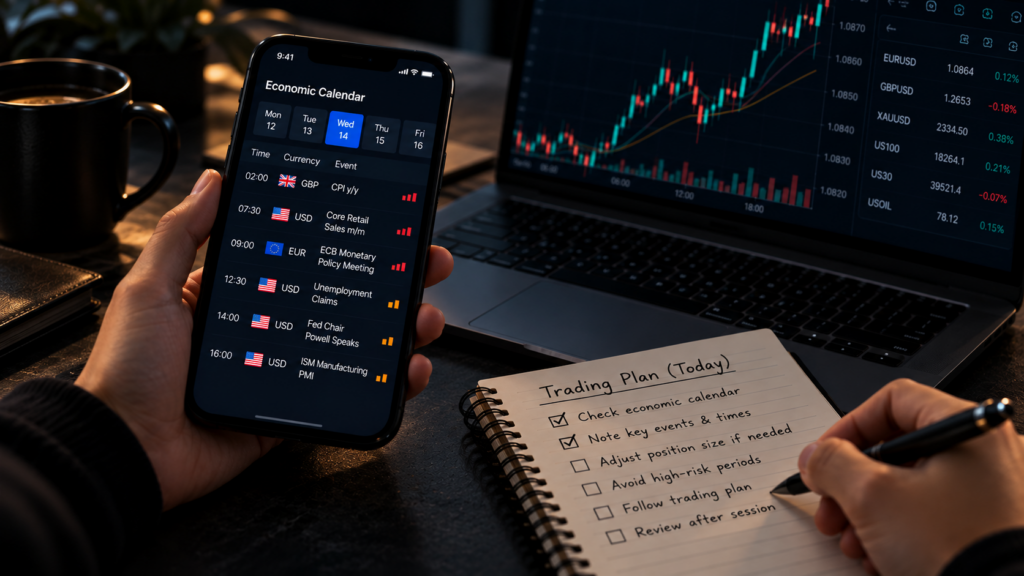
Before starting your prop firm trading session, check:
- What major events are scheduled today?
- What time are they scheduled?
- Which markets could be affected?
- Do any events fall within my trading window?
- Do I currently have open positions?
- Does my trading plan have rules for these conditions?
- Have I checked my daily loss and drawdown position?
This checklist can become part of a consistent pre-trade routine.
Common Mistakes When Using Economic Calendars
Checking Only After Entering a Trade
The calendar is most useful as a preparation tool. Checking it after a position is already open can limit how useful the information is.
Treating Every Event as Important
Not every scheduled release will have the same relevance to your strategy or market.
Trading Solely Because an Event Is Scheduled
An economic release does not automatically create a valid trading setup.
Ignoring the Time Zone
Always confirm the calendar’s time zone so that you know when the event is actually scheduled in relation to your trading session.
Forgetting Your Prop Firm’s Rules
Economic-event awareness does not replace the firm’s trading conditions. If the firm has specific rules around news or volatility, those rules still apply.
A Simple Economic Calendar Routine
You can keep the process simple:
1. Check the calendar.
Review the day’s scheduled events.
2. Filter for relevance.
Focus on events connected to the markets you trade.
3. Note the times.
Mark events that occur during your trading session.
4. Review your exposure.
Check open trades, position size and account risk.
5. Follow your trading plan.
Use the calendar as context rather than a standalone signal.
6. Review afterwards.
Record any relevant market conditions in your trading journal.
Final Thoughts
An economic calendar is a simple but useful preparation tool for traders. It can help you understand what scheduled events are coming up, organise your trading sessions and incorporate market-event awareness into your existing risk-management process.
For economic calendar prop firm trading, the main benefit is preparation rather than prediction.
Check the calendar before trading, understand which events are relevant to your markets and continue to follow the rules and risk parameters of your prop firm account.
A consistent pre-session routine can help you approach each trading day with a clearer understanding of the market environment.
Frequently Asked Questions
What is an economic calendar used for in trading?
An economic calendar shows scheduled economic releases and events that may be relevant to financial markets. Traders can use it to plan their sessions and understand what events are coming up.
Should prop traders check an economic calendar every day?
Checking the calendar before each trading session can be a useful preparation habit, particularly if scheduled economic events are relevant to the markets being traded.
Does an economic calendar predict market direction?
No. It provides information about scheduled events, but it does not guarantee how markets will react.
Can an economic calendar help with risk management?
It can provide additional context when reviewing open positions, position size and upcoming market events. It should be used alongside, rather than instead of, a trader’s risk-management plan.
Should I avoid trading whenever a major event is scheduled?
That depends on your strategy and the rules of your prop firm. A scheduled event alone does not determine whether a trade should or should not be taken.
What should I check on an economic calendar?
Check the event, scheduled time, affected market or currency and any available information about its expected importance. Then consider how the event fits into your planned trading session.